Shibuya · Shinjuku · Harajuku · Akihabara · Tokyo Bay
12 Tokyo locations compared
Street tours & closed circuitsLicence and safety guide
Tokyo street-kart experiences differ by route, duration, starting point and vehicle type.
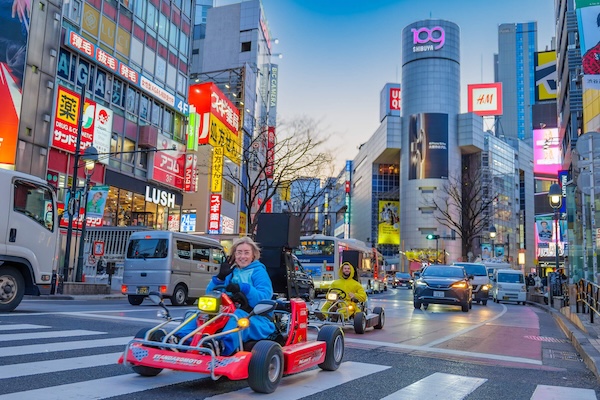
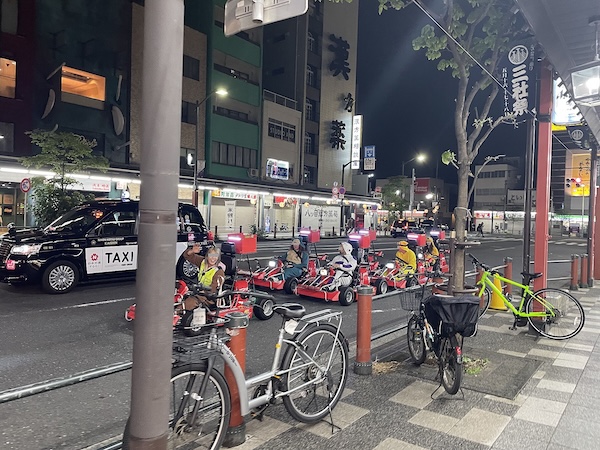
Street go-karting lets you drive a small road-legal kart behind a guide through real Tokyo traffic.
This independent guide compares 12 operators and locations, from the neon streets
of Shibuya to Rainbow Bridge and Tokyo Bay.
Independent comparison: inclusion is not an endorsement. Routes and operating
conditions can change.
Complimentary visits, affiliate links or sponsored placements will always be identified and will not
determine the editorial comparison.
Tokyo go-kart tours at a glance
Information found on operator or current booking pages. Confirm the route, meeting point, insurance
and operating conditions before booking.
Operator & starting area
Published experience
Best suited to
Banana Kart Shinjuku
About 60 minutes driving through Shinjuku and Shibuya
A compact Shinjuku-to-Shibuya route
Akiba Kart Shinjuku
About 60 minutes in a small guided group
Visitors staying in central Shinjuku
Fuji Classic Kart West Shinjuku
Shinjuku and Shibuya street tour
A smaller independent operator
Monster Kart Harajuku
EV kart with 30, 60 and 90-minute plans
Electric karts and a Harajuku start
Street Kart Annex Shibuya
About 60 minutes around Shibuya Scramble and Dogenzaka
The classic Shibuya experience
Tokyo Z Kart Shibuya
EV kart through Shibuya, Harajuku and Omotesando
A shorter, quieter EV tour
Akiba Kart Shibuya
About 60 minutes around Shibuya and nearby fashion districts
A one-hour Shibuya route
Monkey Adventure Kart Shibuya
Shibuya, Harajuku, Omotesando and Yoyogi
Small groups and guide photos
Aloha Go-Kart Shiba
30-minute trial or longer Tokyo Tower/Shibuya tour
A short trial or Tokyo Tower start
JapanKart Kanda
About 120 minutes across central and western Tokyo
The broadest central-Tokyo itinerary
Kartzilla Katsushika
100 or 120-minute old-town, landmark and bay routes
Longer routes and eastern Tokyo
Street Kart Tokyo Shinkiba
About 90–120 minutes via Rainbow Bridge and Tokyo Tower
Tokyo Bay scenery
Go-kart tours starting around Shinjuku
Good for Kabukicho, the National Stadium and routes continuing towards Shibuya.
Banana Kart Shinjuku
Shinjuku
Banana Kart publishes a guided route from the Shinjuku-Gyoen area that can include Shinjuku
Gyoen, Kabukicho, the National Stadium and Shibuya Scramble. Current listings describe about
75 minutes for the complete activity, including approximately 60 minutes of driving, with
costumes, insurance and tour photos included.
Best for: combining Shinjuku and Shibuya in a compact tour.
Despite the “Akiba” name, this branch is at 1-2-8 Shinjuku. Booking pages describe a one-hour
guided experience for groups of one to seven karts, with instructional videos available in
Japanese, English, Chinese and Korean. Some listings publish a height range of 150–185 cm.
Best for: a small group and an eastern Shinjuku meeting point.
Fuji Classic Kart is the renamed Neo Tokyo Kart operation in Nishi-Shinjuku. Public listings
place it at 4-18-2 Nishi-Shinjuku and advertise a guided Shinjuku and Shibuya ride. Because the
business has changed names, verify the operator name, meeting point and cancellation policy
shown on the final confirmation.
Best for: travellers looking for a smaller independent operator.
Monster Kart is approximately two minutes from JR Harajuku Station and advertises electric
street karts. Published options include a short Shibuya–Harajuku ride, a 60-minute
Shinjuku–Shibuya–Harajuku route and a longer course towards Roppongi and Tokyo Tower.
Best for: an EV kart and a very convenient Harajuku start.
The Shibuya Annex branch is at 10-11 Maruyamacho and publishes an approximately one-hour route
around Dogenzaka and Shibuya Scramble. Confirm the exact departure time, route duration and
booking conditions shown for your selected date.
Best for: the most recognisable Shibuya Scramble experience.
Tokyo Z Kart is a Shibuya operator, not a Shinjuku operator. Its published
address is 27-1 Sakuragaokacho, around seven minutes from Shibuya Station. The company
advertises a purpose-built EV kart and a roughly 50-minute route through Shibuya, Harajuku,
Omotesando and Shibuya Scramble.
Best for: a shorter EV experience from central Shibuya.
Akiba Kart Shibuya lists a base at 4-12-1 Higashi and a one-hour sightseeing route around
Shibuya Crossing, Shibuya 109, Bunkamura-dori and Meiji-dori. Similarly branded Akiba Kart and
Street Kart pages can refer to different branches, so use the address on the final confirmation
to identify the correct meeting point.
Best for: a one-hour Shibuya route with clear inclusions.
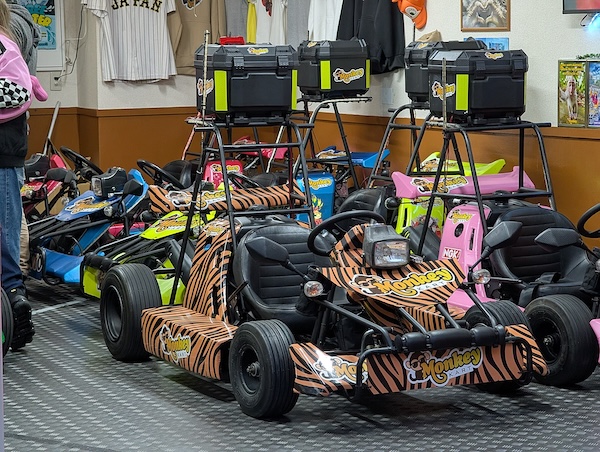
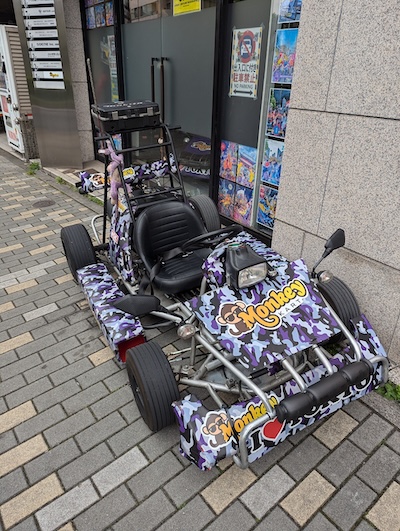
Monkey Adventure Kart has more than one Shibuya-area location. The listing supplied for this
comparison is at 1-27-7 Higashi, while the operator also publishes a second shop at 3-17-3
Shibuya. Its route highlights Shibuya Crossing, Harajuku, Omotesando and Yoyogi Park.
Best for: small-group sightseeing and guide photos.
Aloha Go-Kart is based at 1-4-10 Shiba, near Hamamatsucho, Daimon and Tokyo Tower. Its published
terms list a 30-minute trial and a longer experience, while booking channels advertise routes
connecting Tokyo Tower with Roppongi, Harajuku and Shibuya. Read the optional damage-waiver
terms and possible damage charges before booking.
JapanKart's Kanda branch is a short walk from Kanda Station. Its published 120-minute route can
include the Imperial Palace, National Diet Building, Omotesando, Shibuya Scramble, Roppongi,
Tokyo Tower, Tokyo Station and Marunouchi. It is one of the broadest central-Tokyo itineraries
in this comparison.
Best for: seeing many central-Tokyo landmarks in one ride.
Despite the “Tokyo Station” label sometimes attached to listings, Kartzilla's published meeting
address is 1-20-2 Higashiyotsugi in Katsushika. Its 100 and 120-minute products can cover
combinations of Tokyo Skytree, Asakusa, the Imperial Palace, Ginza and the bay area. The
operator highlights radios, front and rear cameras and optional Insta360 footage.
Best for: longer eastern-Tokyo routes and additional camera equipment.
The branch marketed as Street Kart Tokyo is the Tokyo Bay shop at 2-10-8 Shinkiba, about
10–13 minutes on foot from Shinkiba Station. Its published K-M route lasts approximately
90–120 minutes and features Rainbow Bridge and Tokyo Tower. Allow extra travel time from
central Tokyo and check weather-related route restrictions.
Street karts use public roads. Every driver must be legally entitled to drive in Japan and bring
the required original physical documents. The document you need depends on the
country or territory that issued your driving licence.
France, Germany, Switzerland, Belgium, Monaco and Taiwan
If your licence was issued in one of these six places, an International Driving Permit is not the
correct document for Japan. You normally need:
Your original physical driving licence.
Your passport.
An official Japanese translation of your driving licence.
License Translation Japan
can arrange the official JAF translation online. Travellers upload clear images of the front and
back of their licence, then choose a delivery option such as a print code for Japan or physical
delivery. The printed translation must be carried together with the original licence and passport.
Drivers whose licences were issued in countries participating in the 1949 Geneva Convention
generally need:
An International Driving Permit issued under the 1949 Geneva Convention.
The original physical driving licence from their home country.
Their passport.
The IDP must be obtained from an authorised issuer in the country that issued your licence.
Vienna Convention permits, digital permits and unofficial online documents are not accepted in
Japan. If your country does not fall into either category, confirm the current rules before booking.
Other accepted cases
A valid Japanese driving licence.
A SOFA driving licence for eligible US Forces Japan personnel.
Digital copies, photos and unofficial translations are not substitutes for the required originals.
If the documents are incorrect, operators normally refuse participation without a refund.
A street-kart tour is sightseeing in live traffic, not a race. Karts sit much lower than normal
cars, provide less physical protection and can be difficult for truck or bus drivers to see.
Keep left and follow the guide's line.
Obey traffic lights, road signs, lane markings and speed limits.
Maintain a safe gap instead of racing to catch the kart ahead.
Never weave through traffic or overtake within the group.
Do not use a handheld phone or camera while moving.
Wear secure closed shoes and avoid loose clothing.
Never drive after drinking alcohol or using impairing medication.
Follow the guide's instructions if the group becomes separated.
For an accessible alternative,
City Circuit Tokyo Bay
in Odaiba operates EV rental karts on a dedicated circuit and states that no driving licence is
required. Experienced drivers can also research
New Tokyo Circuit
in Ichihara, Chiba, a 1,076-metre JAF-recognised racing circuit.
Frequently asked questions
Is street go-karting legal in Tokyo?
Yes, provided that the kart meets Japanese road-vehicle requirements and the driver has documents
that legally permit driving in Japan. Normal traffic laws and penalties still apply.
Is it officially connected to Nintendo or Mario Kart?
No. Tokyo street-kart tours are not Nintendo attractions. Costumes or visual similarities do not
indicate an official connection.
Can I drive with a French licence?
Yes, within the applicable visitor-validity period, but you need your original French licence,
passport and an official Japanese translation. You can order the official JAF translation
online through
License Translation Japan.
A French International Driving Permit is not a substitute for this translation in Japan.
What happens if it rains?
Policies differ. Some tours continue in ordinary rain, while severe conditions may result in a
cancellation or reschedule. Check who decides when conditions are unsafe and whether rain gear
is supplied.
Can children participate?
Public-road drivers must hold a licence valid in Japan and operators normally require drivers to
be at least 18. A closed circuit with junior or two-seat karts is more suitable for families.
Is an evening tour better?
Evening tours provide neon views but visibility and traffic can make the drive more demanding.
First-time drivers may feel more comfortable on a daylight departure.
How to choose
Meeting point: the marketed area may not be the garage.
Driving time: check-in and briefing may count towards the advertised duration.
Normal route: ask which landmarks are guaranteed.
Group size: smaller groups can be easier to keep together.
Vehicle: EV karts are quieter than traditional engine karts.
Insurance: check the deductible and damage charges.
Weather: customer cancellation and operator cancellation are different.
Photos: check whether guide photos or camera mounts are included.
What about Akihabara & Asakusa?
Not every tour with an Akihabara-related name departs from Akihabara. Street Kart operates
dedicated Akihabara branches, while JapanKart and Kartzilla publish routes that can include
Akihabara, Asakusa, Ueno or Tokyo Skytree.
Ask whether a landmark is part of the normal route, only included in a longer plan, a drive-by
rather than a photo stop, or subject to replacement when traffic changes.
Final verdict
Shibuya: Street Kart Shibuya Annex.
Long central route: JapanKart Kanda.
Electric kart: Monster Kart or Tokyo Z Kart.
Tokyo Bay: Street Kart Tokyo.
Shinjuku start: Banana Kart or Akiba Kart.
Tokyo Tower: Aloha Go-Kart.
Eastern Tokyo: Kartzilla.
No road licence: City Circuit Tokyo Bay.
Verify the meeting address, live route, insurance, cancellation conditions and driving documents
directly before booking.